
A Smarter Approach to Social Media Management for Business Growth
Learn how effective social media management can help businesses create consistent content, engage the right audience, improve performance, and drive sustainable business growth.
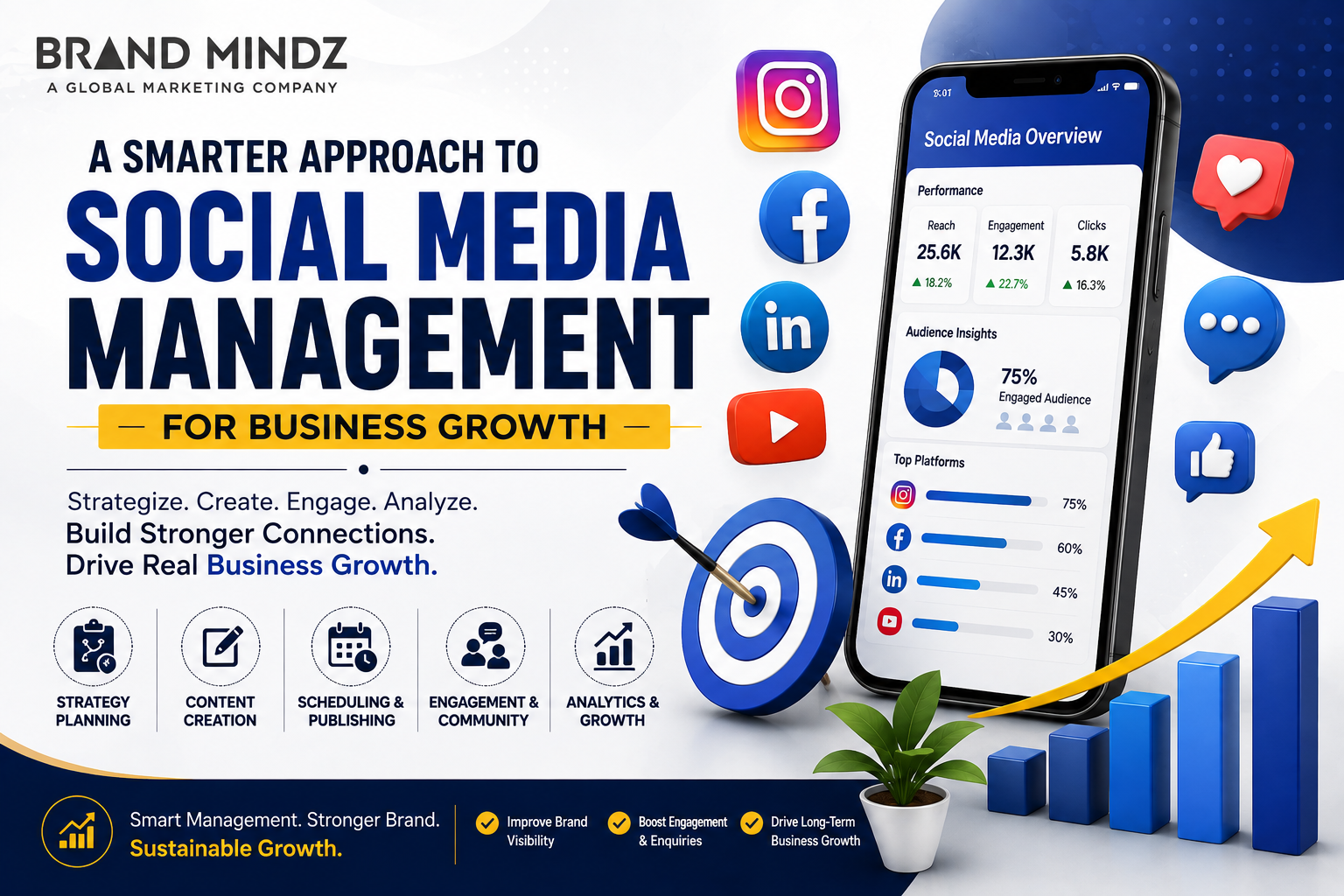
Social media management is not about posting content on different platforms. It means planning, creating, publishing, monitoring, and reviewing posts so a brand can reach the right people and meet its goals. A good method includes planning, creating content, publishing it, monitoring it, and reviewing results to ensure every post matters and helps. Businesses can improve their presence by learning how to create effective social media posts, understanding audiences, and keeping the brand's social media profiles consistently updated. Tools like Buffer for media scheduling can help businesses plan and publish content efficiently. By analyzing and managing audiences, businesses can learn what customers prefer and adjust content accordingly. With social media management strategies, businesses can produce content that catches attention, builds customer relationships, and creates steady chances for business growth.
What Is Social Media Management? Social media management means planning, creating, publishing, watching, and studying content on social media sites. It is not about posting things. Companies must plan carefully. Make content that fits their brand, their audience, and their marketing goals.
Meaning of Social Media Management Social media management is about care. Improving how a brand shows up on sites like Instagram, Facebook, LinkedIn, and YouTube. It means making posts, setting them to go at the right time, and making sure they are as good as possible. It also means talking to customers, checking how things are going, and looking at how people act and react. Companies can use tools like Buffer to plan their posts ahead of time and share them more easily.
Managing Business Accounts Effectively Effective management means taking care of a brand's social media accounts and keeping them organized. It involves having a plan for the content that will be shared. Businesses need to learn how to create social media posts. They also need to come up with content and make sure it is as good as possible. They should look at the people who use the social media platform to see what they like. Using media to talk to customers helps brands form better connections. Using media to talk to customers helps brands form better connections. This also makes people more interested in the brand. This also makes people more interested in the brand.
Importance of a Consistent Online Presence A strong online presence helps businesses keep their brand image clear and stay seen by the people they want to reach. Posting content that is meaningful and up-to-date makes it simpler to talk with customers and earn their trust. By organizing, making, sharing, checking, and looking at content on a regular basis, businesses can do better on social media and help their business grow over time.
Why Businesses Need a Smarter Social Media Strategy Reaching the Right Audience I have found that a good social media strategy helps businesses reach people who're more likely to be interested in their products or services. By posting randomly, businesses can analyze and manage their social audience and understand their interests, needs, and online behavior. This makes it easier to strategize and create content for the right people.
Building Brand Awareness I find that social media gives businesses a way to keep their brand visible. By keeping a brand's social media profiles with regular and useful posts, people can recognize the brand over time. Businesses can focus on creating, scheduling, and optimizing content while keeping the brand's message and visual style the same on all platforms.
Increasing Engagement It is not enough to post content. Companies also have to connect with their people by responding to comments, sending messages, sharing stories, making reels, and using different kinds of content. Figuring out how to make good social media posts can lead to more likes, more shares, more comments, and more talk. Keeping in touch on a regular basis lets companies find out what their people like and then make and improve content based on how people react.
Supporting Business Growth It is not enough to post content. Companies also have to connect with their people by responding to comments, sending messages, sharing stories, making reels, and using different kinds of content. Figuring out how to make good social media posts can lead to more likes, more shares, more comments, and more talk. Keeping in touch on a regular basis lets companies find out what their people like and then make and improve content based on how people react.
Creating Content That Connects With the Audience Educational and Informative Content Good social media content must give people a reason to pause, read, or watch. Businesses can share tips, simple guides, industry information, FAQs, and useful ideas that help solve customer problems. When you analyze and manage your audience, you can understand what information the social audience is looking for and strategize and create relevant content around those interests.
Visual Content, Reels, and Stories Visual content can help your content stand out on social media. I notice that when I use pictures or short videos, social media posts get more clicks and are easier to read. Images, reels, carousels, and stories can show products, give tips, reveal behind‑the‑scenes moments, or introduce a new service. These visual content tools let me share information in a fun and engaging way. Learning to craft social media posts helps businesses pick the best format for each message. Once the visual content is ready, it can be. Fine‑tuned with tools like Buffer.
Customer-Focused Content Good social media content should focus on the audience, not on the business. Customer questions, common problems, feedback, reviews, and useful solutions can be turned into posts. The use of media platforms to interact with customers also helps businesses understand the audience better. By analyzing and managing the audience, brands can create and improve content based on real customer interests.
Maintaining a Consistent Brand Voice A steady brand voice lets people spot a business on all kinds of media sites. The tone, language, pictures, and main message all have to fit the brand. Keeping a brand’s media pages up-to-date also makes the account stay lively and professional. When a brand plans carefully, makes posts, shares them, watches how people react, and checks the brand’s results, a brand can build a bond with its audience and keep a sharp online identity.
Choosing the Right Social Media Platforms Understanding Where the Target Audience Spends Time You do not have to be active on every social media platform to run a good business. The best way to start is to look at the people who follow your social media platform. You need to find out where your target customers spend most of their time. You should look at their age, what they like, what they do for work, and what kind of posts they enjoy. Knowing these details helps a business pick the social media platform. When you pick the social media platform, it becomes much easier to plan your posts and make content that the people you want to reach will actually care about.
Instagram, Facebook, LinkedIn, and YouTube Not every social media platform works the same way for every business. I have noticed that Instagram is great when you want to share pictures, reels, or fun stories. On the other hand, Facebook is a good place to talk to your community and share business updates. If you are looking to connect with professionals or handle B2B content, LinkedIn is the best choice. YouTube is perfect when you need to post videos, how-to tutorials, or helpful information. Instead of posting the same thing everywhere, businesses should focus on making, scheduling, and fixing content so it fits each platform.
Avoiding Unnecessary Platform Management Managing many accounts can take a lot of time and make content management hard. Businesses should choose platforms where their audience's truly active and put their energy there. Keeping a brand's media accounts organized becomes easier when there is a clear platform strategy. Tools like Buffer can also help with scheduling. Allow businesses to plan, publish, and report across more than twelve platforms when they handle many accounts. A focused approach lets businesses carefully manage and improve a brand's presence without spending time on platforms that don't bring value.
Using Analytics to Improve Social Media Performance Tracking Engagement and Reach Analytics helps businesses figure out how their social media posts are doing. Numbers, like likes, comments, shares, views, clicks, and reach, can show which posts are getting noticed. It is easier to see if the social media strategy is working when you plan, create, post, check, and review content on a regular basis.
Understanding Audience Behavior Numbers can also tell businesses a lot more about their audience. When you spend time analyzing and managing your audience, you can see which content people like the most. You can also see when people are online and how people interact with your posts. These insights help businesses make a plan. This way, businesses can create content that actually matches what the social audience wants to see.
Identifying High-Performing Content Not every post will get the reaction. Some reels, some images, some videos, or some informative posts might do better than others. Finding these trends helps companies make and improve content that's more likely to be seen and liked by people. This is also helpful when trying to understand how to make social media posts.
Making Data-Based Improvements Social media management should not stop after publishing a post. Businesses can use performance data to improve content plans. Businesses can adjust posting times, content formats, topics, and messaging based on what the audience responds to. Tools such as Buffer can also help with scheduling and reporting, making social media management easier to oversee and optimize a brand's presence over time.
Using Analytics to Improve Social Media Performance Tracking Engagement and Reach Analytics helps my business see how my social media posts are doing. I look at metrics such as likes, comments, shares, views, clicks, and reach to see which posts catch the eye. If I plan, create, publish, monitor, and analyze content on a regular basis, I can easily see what works and what should be changed.
Understanding Audience Behavior Knowing how people respond to types of content is important. Businesses can look at the audience on their social media platform to learn what interests them, when they are most active, and what content formats they like. This information helps brands plan better and create content that fits, rather than posting content without a clear direction.
Identifying High-Performing Content Certain posts naturally get more engagement than others. A reel can get views. An informative carousel can receive shares or saves. Discovering these patterns helps businesses generate and improve content that the audience likes. This approach also helps businesses understand how to create social media posts.
Making Data-Based Improvements Social media performance needs to be checked instead of just once a campaign is over. Companies can look at the results to make their content topics better, decide when to post, choose the formats, and adjust their messages. Applications like Buffer, for social media planning, can help with scheduling and showing reports. This helps in managing and improving a brand's activity in a smart way and slowly makes social media results better. Common Social Media Management Mistakes
Posting Without a Strategy One common mistake is putting up content without understanding what the business wants to achieve. Unplanned posts might not connect with the people or help the business goals. Before sharing anything, companies should look at the people who use their social media platform and plan and create content that fits what those people like and need.
Inconsistent Posting Regular posts help a brand stay in sight and keep in touch with customers. When a company posts for a few days and then vanishes for weeks, it can be hard to keep people interested. Making content ahead of time, planning when to post, and improving the content can make sharing easier. Services like Buffer can also help companies keep track of their posting plan.
Ignoring Audience Interactions I notice that social media is more than sharing posts. I see that customers often leave comments, send messages, or ask questions, and ignoring these signals can make a brand appear unresponsive. By using media platforms to interact with customers, a brand can build stronger relationships. Businesses should also analyze their audience and manage it carefully so that they
understand customers' needs and feedback. Focusing Only on Promotional Content Constantly pushing products or services can make a social media page seem the same every time. Companies should also post things that're helpful, informative, fun, and focused on customers. By organizing, making, sharing, watching, and looking at content, brands can discover the mix and come up with content that keeps people paying attention. This is part of understanding how to make good social media posts.
How Smart Social Media Management Supports Business Growth Stronger Brand Visibility A smart social media strategy helps businesses stay seen by the people. Making content on a basic schedule, posting it at the right times, and improving it makes the brand activinon the best places. With a plan, businesses can create recognition and make their brand easier for customers to remember. in
Better Audience Relationships Social media allows businesses to talk directly to their customers. By looking at and taking care of their media audience, companies can learn what customers like, what they are wondering about, and what they have to say. Answering comments and messages also makes customers feel like they are being listened to and helps create connections.
More Engagement and Enquiries I have found that useful and relevant content can make people want to like, comment, share, save, or contact a business. When I learn how to create social media posts, I see how brands can craft material that truly connects with their audience. By watching and studying content, I can also uncover which posts bring more engagement and inquiries.
Long-Term Online Growth Growing on social media does not happen overnight. You cannot just post once. Expect magic. Businesses must plan, create, post, watch, and study social media content every day to see real results. When a business takes the time to manage and improve its social media presence, it can keep its social media profiles active. This hard work helps businesses build bonds with customers and helps businesses build a much stronger online presence over time.
Final Thought A way to handle social media management is not just about posting content every day. It means that companies need to plan, make, share, watch, and look at content with a goal in mind. By knowing the people they want to reach, picking the social media sites, keeping the same way of speaking for the brand, nd using numbers to see what is working, companies can do better on social media. Good social media management also helps companies create connections with people who follow them, get more likes and comments, get more questions from customers, and make the brand more known. Programs like Buffer can help with planning posts. Making it easier to handle social media work. When companies keep checking their results and making changes to their plans, they can make content and answer what people want better. With a regular plan for managing social media, companies can have a stronger online presence, talk to the right people, and help their business grow in a lasting way.
FAQ What are the benefits of social media management? Social media management helps businesses maintain a consistent online presence, communicate with customers, improve engagement, and understand audience behavior. It also helps businesses save time through content scheduling and make better decisions by analyzing performance data. A well-managed social media strategy can support brand awareness, lead generation, customer relationships, and long-term business growth.
What are the 5 core pillars of social media management? The five core pillars are 1. Content creation and curation—Creating useful and engaging content for the target audience. 2. Scheduling and publishing—Planning and publishing content at suitable times. 3. Community management—Responding to comments, messages, and customer interactions. 4. Social listening and monitoring—Tracking brand mentions, customer opinions, and industry conversations. 5. Analytics and reporting—Measuring performance and using data to improve future content and strategies.
What tools can be used for overall social media management? Businesses can use social media management tools to plan, schedule, publish, monitor, and analyze content across different platforms. Examples include Sprinklr, Buffer, Hootsuite, and Meta Business Suite. These tools can reduce repetitive work, organize content calendars, monitor audience interactions, and provide performance reports.
What are the latest trends in social media management? Some important trends include the use of AI and automation, centralized social media management, social listening, data-driven content planning, and stronger social media governance. AI can help with routine tasks, while human review is still important for maintaining brand personality and accuracy. In 2026, businesses are also focusing more on unified management because audiences and conversations are spread across multiple platforms.
Are there any real examples of successful social media management? Yes. Sprinklr highlights examples such as Capital University, which used social listening, publishing, and analytics to improve its social strategy, and HP, which used social monitoring and real-time campaign adjustments to respond to audience sentiment. These examples show how businesses can use social media management to move from simply posting content to making data-driven decisions.
What does social media management do? Social media management involves planning, creating, scheduling, publishing, monitoring, and analyzing content across social media platforms. It also includes responding to comments and messages, understanding audience behavior, and improving content based on performance. The main goal is to build brand visibility, increase engagement, and support business growth.
What is the 5-5-5 rule for social media? The 5-5-5 rule is a social media engagement strategy, but there are different versions of it. One common version recommends liking 5 posts, leaving 5 meaningful comments, and responding to 5 messages or conversations each day. It encourages businesses to actively engage with their audience instead of only publishing posts.